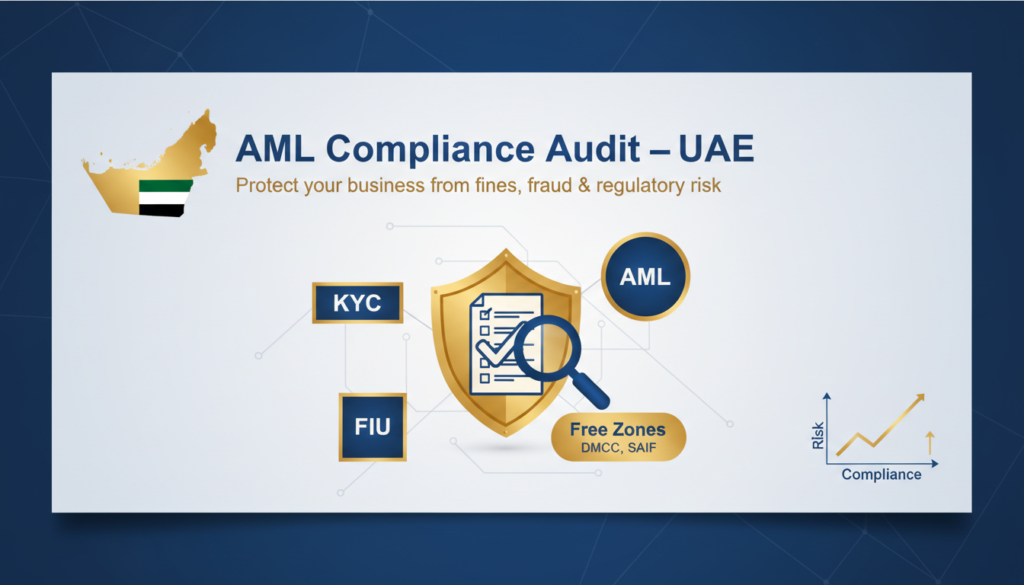
Businesses in the UAE, whether operating in Dubai, Sharjah, or free zones like DMCC and SAIF, must comply with strict Anti-Money Laundering (AML) regulations. Failure to comply can result in heavy fines, reputational damage, or even suspension of business activities. This is why AML compliance audits are essential for protecting your business from regulatory risks.
What is an AML Compliance Audit?
An AML compliance audit is a detailed review of a company’s policies, procedures, and transactions to ensure they meet UAE Anti-Money Laundering laws and regulations. It verifies that your business has effective systems in place to detect, prevent, and report suspicious activities.
The audit focuses on:
- Customer verification (KYC – Know Your Customer)
- Transaction monitoring
- Internal AML policies and procedures
- Staff training and awareness
In simple terms, an AML compliance audit ensures your business is safe from financial crime risks and fully compliant with UAE laws.
Why AML Compliance Audits Are Critical in the UAE
AML compliance is not optional. Regulatory authorities in the UAE, including the Central Bank, Free Zone Authorities, and Financial Intelligence Unit (FIU), strictly enforce AML laws. Here’s why AML audits are essential:
1. Regulatory Compliance
Audits confirm that your business adheres to UAE laws, helping you avoid fines, penalties, and legal action.
2. Risk Management
AML audits identify gaps in your internal controls, reducing the risk of money laundering, fraud, or financing illegal activities.
3. Enhanced Reputation
Companies with verified AML compliance gain trust from clients, partners, and regulators.
4. Operational Efficiency
Audits help streamline AML processes, making it easier for staff to follow procedures and maintain proper records.
5. Early Detection of Issues
Regular AML audits uncover suspicious transactions or weaknesses in compliance programs before they become major problems.
The AML Compliance Audit Process
The process of an AML audit in the UAE typically involves:
1. Planning and Scope
The audit team evaluates your business operations and identifies key areas at risk of money laundering.
2. Review of Policies and Procedures
Auditors examine your AML policies, internal controls, and reporting mechanisms to ensure they meet regulatory standards.
3. Transaction and Customer Verification
Auditors review financial transactions and client records to ensure proper KYC procedures and detect suspicious activities.
4. Reporting and Recommendations
A detailed audit report is provided, highlighting compliance gaps, risks, and actionable recommendations to strengthen AML controls.
Why Choose PPG Auditing of Accounts LLC for AML Audits
Choosing a trusted audit firm is crucial for effective AML compliance. PPG Auditing of Accounts LLC provides:
- Comprehensive AML compliance audits for Dubai, Sharjah, and UAE free zones
- Expert guidance on regulatory requirements and risk mitigation
- Transparent and actionable audit reports
- Support for internal controls, staff training, and process improvement
Conclusion
AML compliance audits are vital for any business operating in the UAE. They protect your company from regulatory risks, help maintain your reputation, and ensure that your operations are secure against financial crimes.